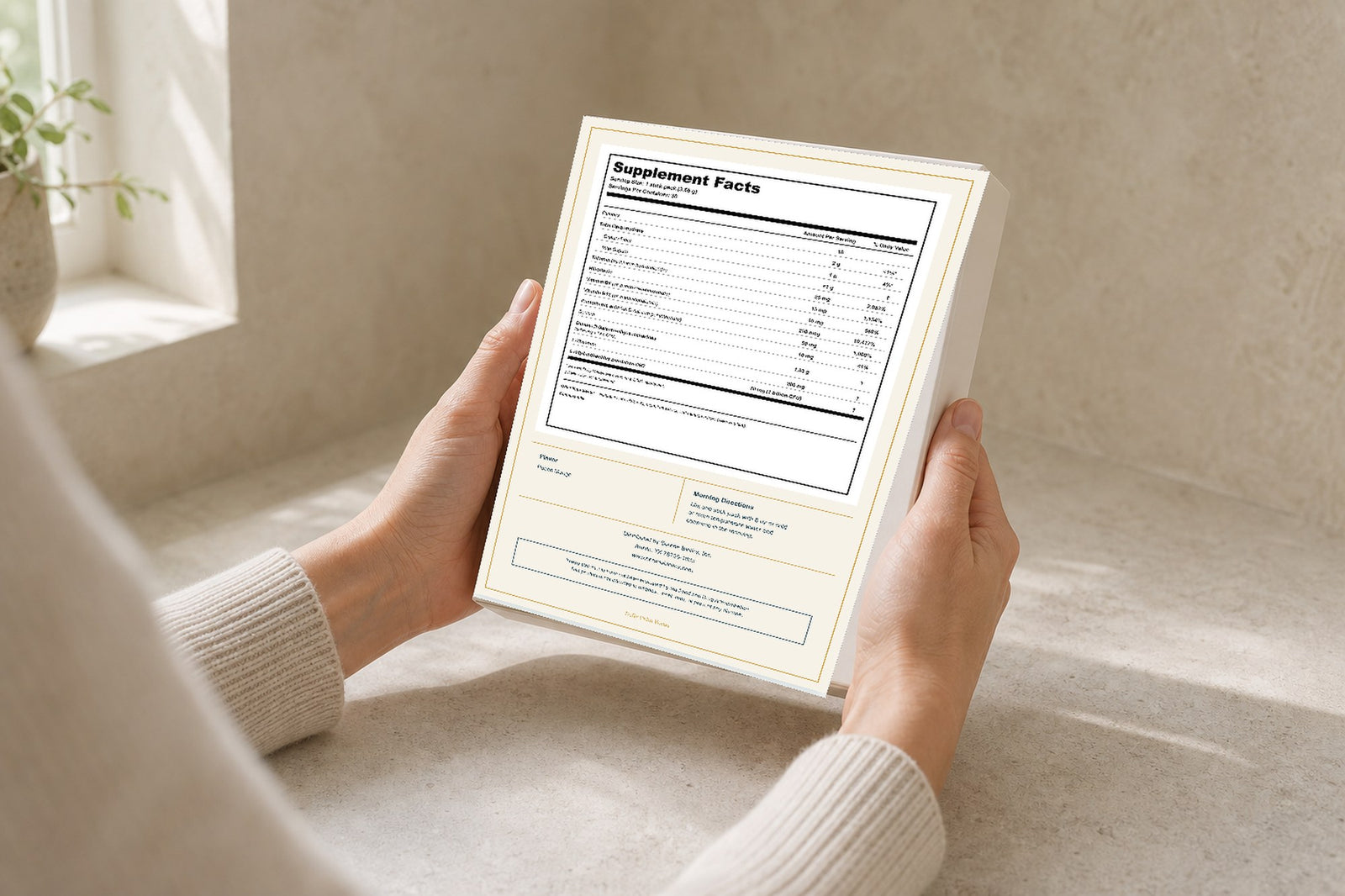
A polished label can still leave the important questions unanswered. The strongest evaluation starts with five checks: identity, amount, evidence fit, form and dose, and finished-lot testing.
1. Look for the exact ingredient identity
A species name is not always enough. Probiotic evidence is often strain specific, which is why a label should identify the strain when the claim relies on strain-level research. Serene Biotics names L. plantarum DR7 rather than stopping at the species.
Branded ingredients can also make the research trail easier to follow. Bimuno® identifies the GOS prebiotic used in the formulas and connects it to a defined supplier record.
2. Find the exact amount
A proprietary blend can disclose a list while hiding the amount of each component. A transparent label shows the amount of every active so a reader can compare the formula with the cited research.
The meaningful question is not whether an ingredient has ever appeared in a study. It is whether the cited study used the same identity, a comparable form, a relevant amount, and a population that fits the claim.
3. Separate direct matches from ingredient-level context
Serene Biotics shows these comparisons directly:
- L-theanine: the label supplies 200 mg, an amount used in cited human trials.
- L. plantarum DR7: the label supplies 1 billion CFU, the amount used in the cited Chong trial.
- Bimuno GOS: the label supplies 1.37 g active GOS, the amount directly studied in Vulevic 2018.
- Magnesium bisglycinate: the cited 2025 sleep trial used 250 mg elemental magnesium. Nightly Rest & Restore supplies the same form at 200 mg. This is the same form at a different dose.
- B-complex: the formula discloses five B vitamins, including B6 as P-5-P and B12 as methylcobalamin. The cited B-vitamin research studied other formulations, not this exact five-vitamin blend.
4. Treat form comparisons with care
Terms such as glycinate and bisglycinate are often used for magnesium bound to glycine. A form name can matter, but it does not erase differences in elemental dose, study population, or study design.
One small absorption study in patients with ileal resection found higher absorption for magnesium diglycinate than oxide. That result should not be generalized to healthy adults or used as a universal ranking of magnesium forms.
5. Ask what finished-lot testing actually shows
A testing seal is not proof by itself. Look for the laboratory, method, specification, lot number, and result. Identity, potency, microbial limits, and contaminants are separate questions and may require separate methods.
Serene Biotics intends to connect finished-lot records to the batch code on each carton as results become available. Until a result exists for a specific lot, the site should describe the testing program without implying that an unpublished certificate already exists.
The short version
Choose labels that name the ingredient, show the amount, distinguish direct study matches from broader context, and make lot-level quality evidence easy to inspect. Every Serene Biotics amount is disclosed. The finished formula has not been clinically tested.
Primary studies referenced
- Vulevic 2018: GOS and digestive comfort
- Chong 2019: L. plantarum DR7
- Schuster 2025: magnesium bisglycinate and subjective sleep outcomes
This article is educational and is not medical advice.